



What Are the Features and Applicable Scenarios of the 17AM Temperature and Current Control Type Thermal Protector?

What Is the 17AM Temperature and Current Control Type Thermal Protector?
The 17AM is a compact, dual-function thermal protector that combines temperature-sensitive bimetal switching with current-sensitive heating to provide a two-dimensional protection mechanism for electric motors, transformers, and other electrically driven devices. Unlike single-function thermal cutoffs that respond only to ambient or surface temperature, or simple overcurrent fuses that respond only to electrical overload, the 17AM integrates both sensing mechanisms into a single self-contained component. This dual-response design means the protector will trip — opening the circuit — whenever either the ambient temperature around the device exceeds the rated trip temperature, or whenever the current flowing through the device exceeds the rated current threshold, or when both conditions occur simultaneously. The combination of these two protective responses in one device addresses the real-world failure modes of electric motors far more comprehensively than either protection mechanism alone could achieve.
The 17AM protector belongs to the broader family of bimetal disc thermostat protectors, which operate on the principle that a bimetallic disc — composed of two bonded metals with different coefficients of thermal expansion — snaps from a convex to a concave shape at a precise temperature, mechanically opening or closing electrical contacts. In the 17AM, an additional resistance heating element is integrated into the assembly. When excess current flows through this heater element, it generates supplementary heat that adds to the ambient thermal load on the bimetal disc, causing it to trip at a current level that would not by itself raise the surface temperature of the protected device to a dangerous level. This current-assisted thermal tripping is what defines the 17AM as a temperature and current control type protector, distinguishing it from pure temperature-only protectors in the same product family.
Core Technical Features of the 17AM Thermal Protector
The 17AM thermal protector is engineered with a specific set of technical features that define its protection capability, electrical rating, physical installation requirements, and operational reliability. Understanding these features in detail is essential for engineers and procurement professionals specifying protection components for electrical equipment.
Dual-Mode Protection: Temperature and Current Response
The defining feature of the 17AM is its integrated dual-mode protection. The bimetal disc element provides the primary temperature response, tripping when the protector body temperature reaches the rated trip point — available in a range of standard trip temperatures typically spanning from 70°C to 170°C in 5°C or 10°C increments depending on the manufacturer's rating series. The internal resistance heater provides the current response, adding thermal energy proportional to the square of the current (following Joule's law: Q = I²Rt) to the bimetal disc. This means that at high overcurrent levels, the protector trips quickly due to the rapid heat generation in the heater element, while at moderate overcurrent levels close to the rated current, the protector trips more slowly as the combined temperature gradually rises to the bimetal trip point. This inverse time-current characteristic closely matches the thermal damage curve of most electric motors and transformer windings, providing protection that is well-matched to the equipment being protected.
Automatic Reset Function
The 17AM is designed as an automatic reset protector, meaning that once the device has tripped and the cause of the overtemperature or overcurrent condition has been removed, the protector automatically resets and closes the circuit as the bimetal disc cools below the reset temperature. The reset temperature is typically 20°C to 40°C below the trip temperature, creating a hysteresis band that prevents the protector from rapidly cycling open and closed in marginal conditions. This automatic reset characteristic makes the 17AM suitable for applications where continued operation after a fault condition is resolved is desirable — such as in appliances or equipment that must resume function automatically after a temporary overload — without requiring manual intervention to reset the protection circuit. For applications where latching in the tripped state after a fault is preferred for safety reasons, alternative manual reset or one-shot thermal cutoff devices would be specified instead.
Compact Disc-Type Form Factor
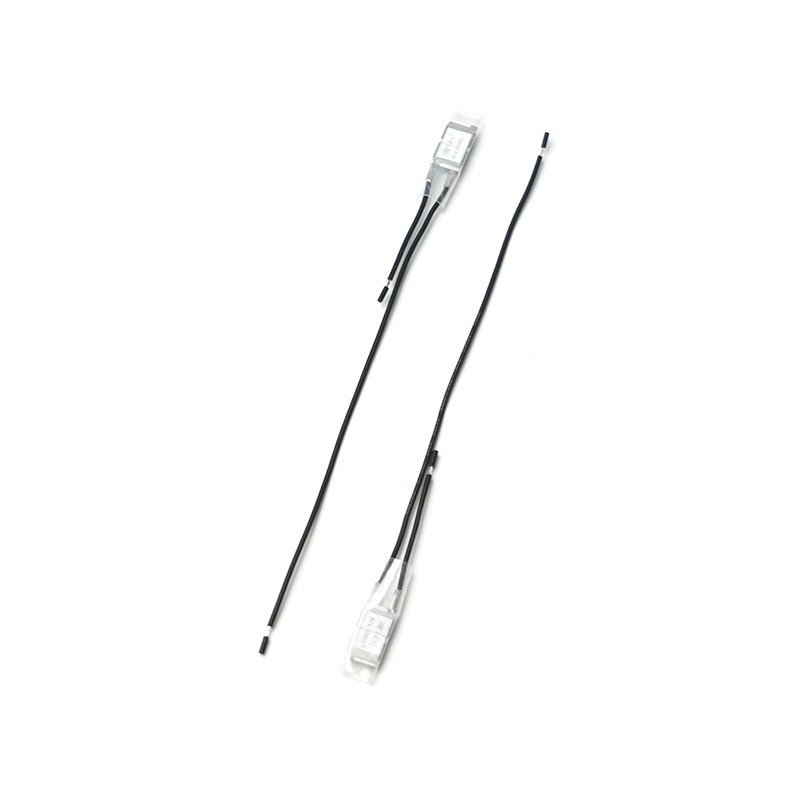
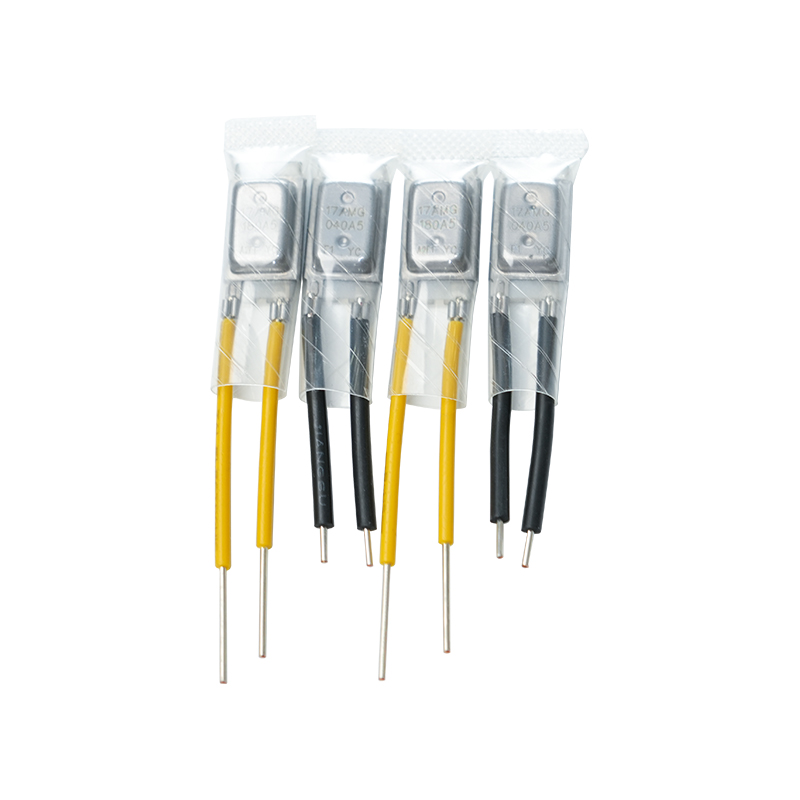
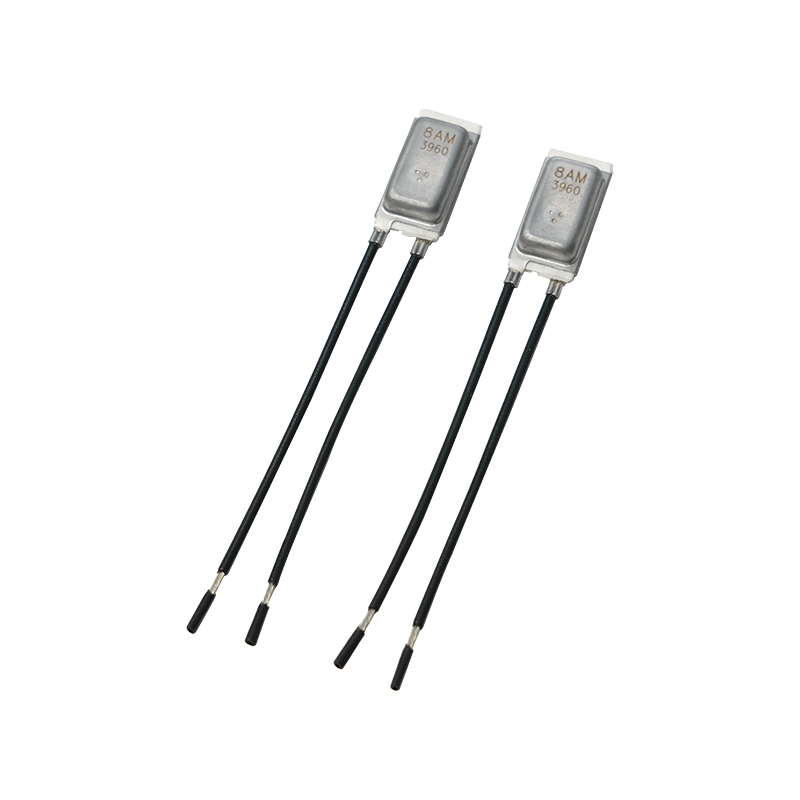
The 17AM protector is manufactured in a disc-shaped housing, typically with an outer diameter of approximately 17 mm — which is reflected in the "17" designation of the product series — and a body height of approximately 6 mm to 8 mm depending on the specific variant. This compact disc form factor allows the protector to be embedded directly within motor windings, transformer coil assemblies, or other confined spaces where larger protection devices could not be installed. The housing is typically constructed from a flame-retardant thermoplastic material compliant with UL 94 V-0 flammability requirements, ensuring that the protector itself does not contribute to fire propagation in the event of a severe fault condition. Lead wires extend from the disc body for circuit connection, with wire length, gauge, and insulation rating specified to suit the installation environment.
Rated Voltage and Current Specifications
The 17AM protector is rated for use in both AC and DC circuits, with standard voltage ratings typically covering 250V AC and 24V to 125V DC. The rated current — the continuous current the protector can carry without tripping due to self-heating of the resistance element — is available in multiple standard values typically ranging from 1A to 15A, with the most common ratings for small motor protection applications being in the 2A to 10A range. It is important to understand that the rated current is not a hard trip threshold but rather the current level at which the device is designed to carry indefinitely without false tripping at rated ambient temperature; tripping due to current overload occurs at levels significantly above the rated current, typically 2 to 4 times the rated current depending on the time duration, following the inverse time-current characteristic.
Wide Trip Temperature Range and Calibration Accuracy
The 17AM series covers a broad trip temperature range to accommodate the thermal limits of different protected equipment. Standard trip temperature options typically range from 70°C to 170°C, with calibration accuracy of ±5°C or better at the rated trip temperature. This accuracy is critical in applications where the margin between normal operating temperature and the thermal damage threshold of the protected equipment is narrow — for example, in Class B or Class F motor windings where the allowable temperature rise is defined by international standards. The bimetal disc geometry and alloy composition are precision-engineered for each trip temperature rating to ensure consistent snap-action behavior and stable calibration over the service life of the protector.
Technical Specifications Summary of the 17AM Thermal Protector
The following table provides a consolidated reference of the key technical specifications for the 17AM temperature and current control type thermal protector:
| Parameter | Specification |
| Protection Type | Temperature + current (dual control), automatic reset |
| Trip Temperature Range | 70°C – 170°C (in standard increments) |
| Trip Temperature Accuracy | ±5°C |
| Reset Type | Automatic (self-resetting on cooling) |
| Rated Voltage | 250V AC / 125V DC |
| Rated Current Range | 1A – 15A (model dependent) |
| Body Diameter | Approx. 17 mm |
| Body Height | 6 mm – 8 mm |
| Housing Material | Flame-retardant thermoplastic (UL 94 V-0) |
| Electrical Life | 6,000 – 10,000 cycles (at rated load) |
| Common Certifications | UL, CUL, TÜV, VDE, CQC |
Applicable Scenarios for the 17AM Thermal Protector
The dual temperature and current control capability of the 17AM makes it applicable across a wide range of electrical equipment categories where both thermal and overcurrent fault conditions must be anticipated and guarded against. The following scenarios represent the primary application areas where the 17AM is specified and used.
Single-Phase Induction Motors in Household Appliances
Single-phase induction motors powering household appliances such as washing machines, refrigerator compressors, air conditioning fan motors, dishwashers, and vacuum cleaners are among the most common applications for the 17AM protector. These motors are subject to two distinct overload conditions during normal service life: thermal overload caused by inadequate ventilation, high ambient temperature, or continuous operation beyond the motor's thermal rating; and current overload caused by mechanical jamming, starting failure, or voltage supply abnormalities that cause the motor to draw excessive current without reaching rated speed. The 17AM protects against both these failure modes simultaneously. It is installed by embedding it directly within the motor winding stack, where it is in intimate thermal contact with the hottest part of the winding insulation and simultaneously carrying the motor's operating current through its internal heater element.
Fractional Horsepower Motors in Power Tools and Garden Equipment
Electric drills, angle grinders, circular saws, lawn mowers, hedge trimmers, and similar power tools and garden equipment use fractional horsepower motors that are routinely subjected to intermittent heavy loading and occasional stall conditions when the tool bites into hard material. The 17AM is well-suited to these applications because its current-responsive heater element provides fast protection during the high-current stall condition — where the motor draws locked-rotor current that can be 5 to 7 times the rated running current — while its temperature response protects against the cumulative thermal damage that occurs during sustained heavy-load operation below stall current levels. The compact 17 mm disc form factor is easily accommodated within the confined motor housings typical of portable power tools.
Small Transformer and Ballast Protection
Low-power transformers used in consumer electronics, lighting ballasts, HVAC control circuits, and industrial control panels are subject to overtemperature from sustained secondary overload, short circuit on the secondary winding, or inadequate ventilation around the transformer core. The 17AM is widely used in these applications by mounting it in direct contact with the transformer core or winding bobbin, where it monitors winding temperature while also carrying primary or secondary current through its heater element. In fluorescent lighting ballasts in particular, the 17AM serves as the primary safety device preventing transformer overheating that could result in insulation ignition — a safety-critical function that is required by product safety standards in most markets.
Pump Motors in Water Treatment and HVAC Systems
Circulation pump motors in heating systems, cooling towers, chilled water systems, and water treatment plants operate continuously for extended periods and must be protected against both dry-running conditions — where loss of liquid in the pump results in rapid temperature rise from friction and loss of cooling — and against overload caused by pump cavitation, valve blockage, or impeller fouling. The 17AM protector embedded in the pump motor winding provides reliable thermal and overcurrent protection in these applications, with the automatic reset function allowing the pump to resume operation automatically once the fault condition is resolved and the motor has cooled sufficiently, without requiring a maintenance technician to physically reset a manual protection device.
Compressor Motors in Refrigeration and Air Conditioning
Hermetic and semi-hermetic compressor motors used in refrigerators, freezers, air conditioners, and heat pumps operate in a sealed environment where direct inspection is impossible and where motor failure due to overheating can release refrigerant and cause significant damage. The 17AM protector is a standard component in compressor motor protection, installed within the motor winding to provide continuous monitoring of both winding temperature and motor current. In refrigeration compressors, the protector must also be rated to withstand the chemically aggressive atmosphere inside the compressor shell, which contains refrigerant vapors and compressor oil — requirements that define the insulation materials and seal integrity specifications of the 17AM variant selected for this application.
Fan Motors in Ventilation and Cooling Applications
Axial and centrifugal fan motors used in building ventilation systems, industrial process cooling, electronic equipment cooling, and domestic range hoods are subject to overload when fan blades become obstructed, when bearing wear increases mechanical resistance, or when the motor is operated in a high-ambient-temperature environment such as an industrial furnace exhaust system. The 17AM provides continuous protection in these applications, with its combined temperature and current response ensuring that both the thermal and electrical dimensions of fan motor overload are covered. For fan motors in safety-critical ventilation applications such as emergency smoke extraction systems, the auto-reset characteristic of the 17AM allows the system to resume operation automatically once the fault is cleared, supporting the fail-safe operational requirements of life safety systems.
Installation Guidelines and Selection Considerations for the 17AM
Correct installation and selection of the 17AM thermal protector are as important as the component's inherent design quality in determining how effectively it protects the target equipment. The following guidelines address the most critical installation and selection factors.
- Trip temperature selection: Select a trip temperature that is above the maximum normal operating temperature of the protected equipment — including all normal load and ambient temperature variations — but below the temperature at which thermal damage to winding insulation or other components begins. As a general guideline, the trip temperature should be at least 10°C above the maximum normal operating temperature and at least 10°C below the thermal damage threshold of the insulation class.
- Rated current selection: Select a rated current value that allows the protected equipment to operate continuously at full rated load without the protector tripping due to self-heating, while ensuring that overcurrent at levels dangerous to the equipment causes tripping within an acceptable time. Always consult the manufacturer's time-current tripping curves to verify that the protection response at the expected overload levels meets the equipment's thermal protection requirements.
- Thermal contact during installation: The protector must be installed in intimate thermal contact with the component it is monitoring — typically the motor winding or transformer core. Poor thermal contact due to air gaps, inadequate clamping, or improper embedding within the winding will slow the protector's temperature response and reduce its effectiveness against thermal overload conditions.
- Series connection in the circuit: The 17AM must be connected in series with the motor or load circuit so that the full operating current flows through its internal heater element. Connecting the protector in a control circuit or bypass arrangement that does not carry full load current will disable the current-response function entirely, leaving only temperature protection active.
- Compliance with applicable safety standards: For products intended for sale in regulated markets, verify that the 17AM variant selected carries the certifications required by the applicable product safety standard — for example, UL 547 for motor thermal protectors in North America, or IEC 60730-1 for automatic electrical controls in European markets. Using an uncertified protector in a certified end product invalidates the product certification and creates regulatory and liability risk.
The 17AM temperature and current control type thermal protector occupies an important position in the landscape of electrical protection components because it delivers comprehensive dual-mode protection in an extremely compact, low-cost, easily installed package. Its combination of bimetal temperature response and current-heating-assisted tripping closely mirrors the actual failure dynamics of the electric motors and transformers it protects, making it a more effective and application-appropriate protection solution than single-mode alternatives. For engineers designing small motor-driven appliances, industrial equipment, HVAC systems, and consumer electronics where reliable, cost-effective overload protection is required, the 17AM represents a well-proven and technically sound component choice that has been validated across decades of global application experience.



যেমন চীন থার্মাল প্রোটেক্টর নির্মাতারা, গ্রাহকদের উচ্চ-মানের এবং নির্ভরযোগ্য সুরক্ষক এবং বৈদ্যুতিক পণ্য সুরক্ষা সুরক্ষা সমাধান সরবরাহ করুন।
-
Tel:+86-515-88498139
-
Email:[email protected]
-
Phone:+86-13913681876
-
Add: বিল্ডিং সি, নং 888 হুয়ানহু ওয়েস্ট দ্বিতীয় রোড, লিঙ্গং নিউ এরিয়া, চীন (সাংহাই) পাইলট মুক্ত বাণিজ্য অঞ্চল
